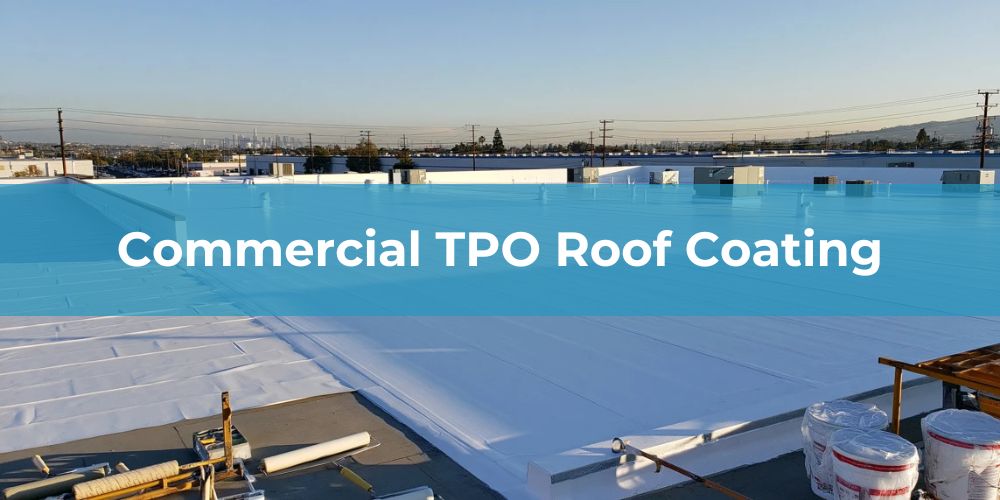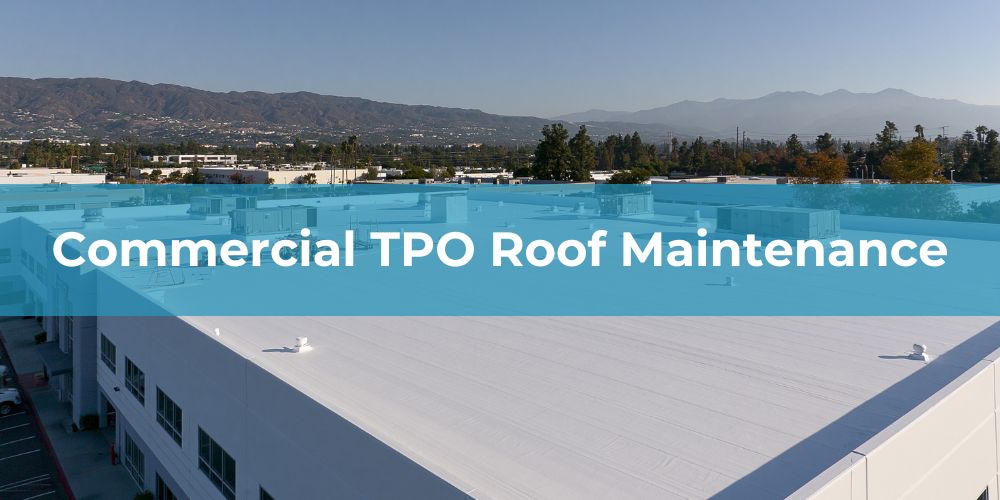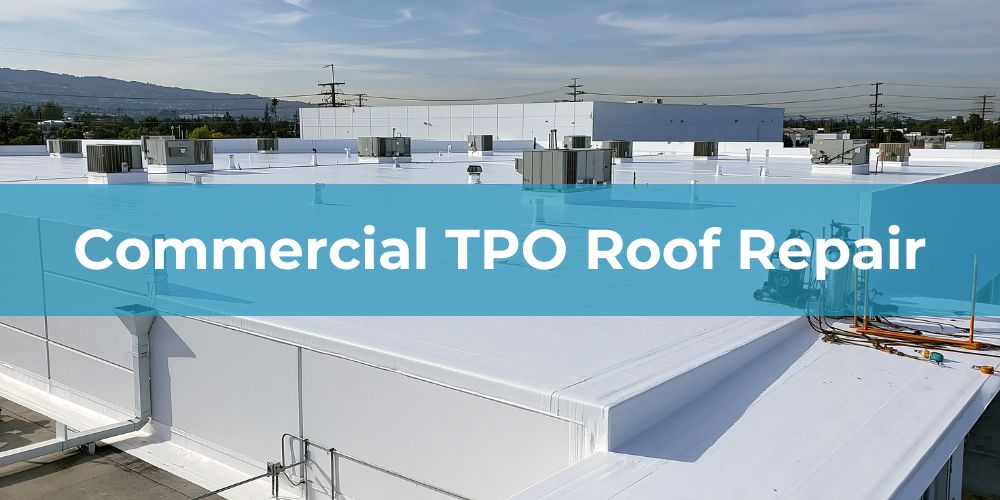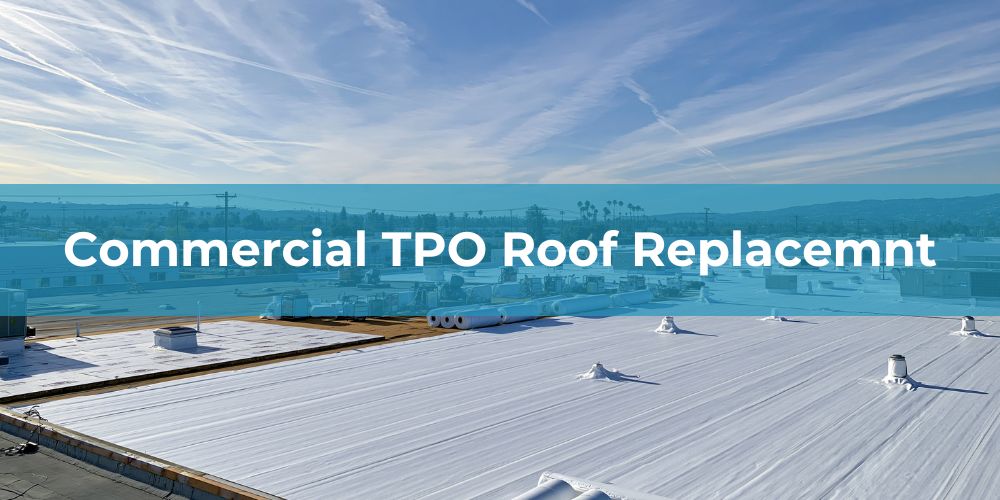
TPO Roofing Los Angeles: Full-Service Commercial TPO Roofing
TPO Roofing Los Angeles provides commercial TPO roof repair, replacement, restoration, coating, and preventive maintenance for flat and low-slope roofing systems across Los Angeles, California. TPO Roofing Los Angeles conducts work on warehouses, distribution centers, manufacturing facilities, retail properties, offices, restaurants, multifamily commercial assets, and mixed-use developments. All commercial roofing work is completed by a California-licensed C-39 roofing contractor. The company specializes in thermoplastic polyolefin roofing systems, including mechanically attached, fully adhered, and induction-welded TPO assemblies. Each roof is assessed according to the installed membrane, attachment method, insulation condition, moisture presence, drainage performance, seam integrity, rooftop equipment, previous repair history, building use, and exposure to Los Angeles heat, ultraviolet radiation, airborne debris, coastal influence, and seasonal wind.
How Do Los Angeles Conditions Affect TPO Commercial Roofs?
Los Angeles conditions affect TPO commercial roofs by accelerating membrane surface aging, concentrating movement at welded details, restricting low-slope drainage, contaminating repair surfaces, corroding exposed metal components, and increasing pressure on vulnerable attachment points. These effects occur across the membrane field, seams, flashings, penetrations, fasteners, perimeter securement, drains, scuppers, insulation, cover boards, roof decks, and rooftop equipment interfaces.
- Ultraviolet exposure and prolonged surface heat → accelerate → TPO membrane aging. Prolonged solar exposure acts on the exposed membrane surface, welded seams, flashing materials, and previously repaired areas. Over time, this can contribute to surface weathering, loss of flexibility, localized deterioration, and reduced resistance around already vulnerable details. The effect is most significant where the membrane has aged unevenly, accumulated contamination, or been subjected to repeated repairs and rooftop traffic.
- Daily heating and cooling → create → differential movement across seams, penetrations, curbs, and perimeter details. TPO membranes, insulation, cover boards, metal edges, fasteners, and roof substrates do not always expand and contract at the same rate. Repeated movement can weaken defective welds, pull against flashing transitions, loosen perimeter components, and create openings around pipes, drains, walls, skylights, and rooftop equipment. This movement-related stress is distinct from surface aging because it acts through the interaction between different roof components.
- Blocked drains, restricted scuppers, and structural low points → cause → ponding water. Dust, leaves, organic debris, rooftop equipment, and poorly positioned drainage components can prevent water from leaving a low-slope roof efficiently. Prolonged standing water applies sustained pressure to welded seams, drain flashings, previous repairs, membrane attachment points, and concealed insulation. This increases the risk of saturation, membrane deformation, insulation deterioration, and recurring interior leaks.
- Airborne dust and urban particulate → accumulate around → seams, drains, equipment, and low points. Deposited contamination can obstruct drainage, retain moisture, conceal small membrane defects, and prevent primers, patches, sealants, adhesives, or coatings from bonding reliably. A contaminated TPO surface must therefore be cleaned, prepared, and checked for compatibility before repair, welding, bonding, or coating work begins.
- Coastal moisture and salt-bearing air → affect → exposed metal components and perimeter assemblies. Commercial buildings in coastal and near-coastal parts of Los Angeles may experience marine-layer moisture and salt deposition. Fasteners, washers, edge metal, termination bars, drains, equipment supports, and other exposed components can lose their protective finish or mechanical integrity. Corrosion around these details can weaken membrane securement and create new water-entry points.
- Santa Ana winds and localized uplift pressure → stress → membrane attachment and roof edges. Wind pressure is concentrated around corners, perimeters, parapets, penetrations, and changes in roof elevation. Weak fasteners, deteriorated plates, loose edge metal, defective welds, or inadequately secured flashing can permit membrane movement, billowing, seam separation, or perimeter displacement. Once an opening develops, wind-driven rainfall can enter beneath the membrane and spread into the surrounding roof assembly.
- Combined exposure conditions → turn isolated defects into → wider roof-system failure. Surface aging may weaken a membrane area, thermal movement may stress the adjoining seam or flashing, and wind pressure may enlarge the resulting opening. Rainfall can then enter beneath the membrane, while restricted drainage prolongs moisture exposure. Trapped water may subsequently saturate insulation, deteriorate cover boards, corrode fasteners, weaken adhesives, or damage the roof deck. TPO Roofing Los Angeles therefore evaluates the complete assembly rather than treating only the visible surface defect or interior leak location.
How Does TPO Roofing Los Angeles Select the Correct Roofing Solution?
TPO Roofing Los Angeles selects the roofing solution by determining whether the roof remains serviceable but requires preventive maintenance, whether the source or extent of water entry remains uncertain, whether the roof contains an isolated repairable defect, whether broader deterioration can be corrected while retaining most of the existing assembly, whether a defined section requires reconstruction, or whether the roof has suffered widespread loss of performance. The decision is based on the extent and distribution of moisture, the condition of the TPO membrane and welded details, the stability of the insulation and roof substrate, the reliability of the attachment system, the effectiveness of drainage, and the roof’s response to previous repairs. The existing assembly is identified as mechanically attached, fully adhered, or induction welded because each system transfers loads and develops failures differently. Drains, scuppers, structural low points, perimeter securement, rooftop equipment interfaces, and recurring leak locations are then reviewed to establish the cause, depth, and likely progression of the problem.
- Serviceable roof with emerging vulnerabilities but no active system failure → requires → preventive TPO roof maintenance. Preventive maintenance is appropriate where the membrane remains dry, securely attached, and broadly serviceable, but minor conditions could develop into future defects. These may include debris accumulation, beginning drainage restriction, exposed sealants, minor seam concerns, vulnerable flashing details, localized equipment-zone wear, or early deterioration around penetrations and roof edges. Maintenance may include cleaning drains and scuppers, removing debris, checking seams and flashings, renewing compatible sealants, protecting high-traffic areas, and correcting minor defects before moisture enters the roof assembly.
- Unconfirmed water-entry source or uncertain moisture distribution → requires → TPO roof leak detection and moisture investigation. Diagnostic investigation is necessary where the interior leak location does not clearly identify the roof defect, where water entry recurs after previous repairs, or where moisture may have traveled laterally beneath the membrane. Leak investigation may include seam probing, weld testing, inspection of flashings and penetrations, review of drainage paths, and assessment of insulation or substrate moisture. Corrective work is selected only after the source, extent, and affected roof components have been identified.
- Isolated defect within a dry and stable roof → requires → targeted TPO roof repair. Repair is appropriate where the surrounding membrane remains serviceable, the insulation and substrate are dry, the attachment system is secure, and the defect can be clearly defined. Suitable repair conditions may include an isolated puncture, open weld, membrane split, failed flashing, damaged penetration, defective drain detail, or localized perimeter failure. The affected area is cleaned and prepared before compatible TPO material is heat welded or otherwise installed using a method suitable for the existing assembly. Any contributing drainage, movement, contamination, or attachment defect must also be corrected so the repair restores the complete detail rather than merely covering the visible opening.
- Broader but reversible deterioration within a serviceable assembly → may require → TPO roof restoration or coating. Restoration is appropriate where the roof requires more than isolated repairs but most of the existing membrane, insulation, attachment system, and substrate can remain in place. The scope may include seam repair, flashing reconstruction, penetration correction, drainage improvement, surface preparation, and limited removal of discrete wet or deteriorated materials before the retained roof is restored. A protective coating may form part of the restoration only where the TPO membrane is dry, clean, securely attached, chemically compatible, and capable of achieving reliable adhesion. Coating is not used to conceal saturated insulation, unstable attachment, active seam failure, persistent ponding, or deteriorated substrate materials.
- A continuous, defined area of irreversible system damage → requires → partial TPO roof replacement. Partial replacement is appropriate where a specific section of membrane and underlying roof buildup contains saturation, severe deterioration, failed attachment, damaged insulation, or unstable substrate materials that cannot be corrected while retaining that section. Unlike restoration, which preserves most of the existing assembly and uses limited removal as supporting work, partial replacement removes and reconstructs a defined area of the complete roof system. The replacement boundary is determined by the actual extent of moisture and material failure rather than the location of the visible interior leak.
- Widespread moisture or systemic performance failure → requires → complete TPO roof replacement. Full replacement becomes appropriate where defects are no longer isolated or where the existing assembly cannot support a dependable repair or restoration program. Indicators include widespread saturation, repeated leaks across multiple roof areas, extensive seam failure, severe membrane deterioration, unstable attachment, persistent ponding, damaged insulation, deteriorated cover boards, weakened substrate materials, or repeated repairs that have failed to restore reliable performance. In these conditions, continued patching may address individual symptoms while leaving the wider waterproofing, drainage, insulation, or attachment failure active.
TPO Roofing Los Angeles therefore selects preventive maintenance, diagnostic investigation, targeted repair, restoration, partial replacement, or complete replacement according to the scale, depth, and certainty of the roof failure. The selected scope must correct the visible defect, any concealed moisture or material deterioration, and the drainage, movement, contamination, or attachment condition that caused the problem to develop.
How Do TPO Roofing Systems Perform Across Los Angeles Commercial Buildings?
TPO roofing performance across Los Angeles commercial buildings depends on how roof size, building use, rooftop equipment, drainage, service traffic, occupancy, and operational exposure interact with the membrane and its details. The same TPO assembly can therefore develop different failure patterns on a warehouse, manufacturing facility, retail center, restaurant, office, or multifamily property. These six building contexts create distinct inspection and corrective priorities:
- Warehouses and distribution centers: large roof areas increase seam length, attachment points, drainage distance, and the potential extent of concealed moisture migration.
- Manufacturing and industrial buildings: equipment, vibration, process residue, supports, and maintenance traffic concentrate deterioration around operational zones.
- Retail properties and shopping centers: multiple tenants, rooftop systems, alterations, and contractor access increase the number of vulnerable interfaces.
- Restaurants and commercial kitchens: grease, exhaust residue, refrigeration equipment, and repeated servicing affect membrane cleanliness, compatibility, and detailing.
- Offices and mixed-use buildings: occupied interiors, wall transitions, internal drainage, and multiple roof elevations increase the importance of accurate leak-path investigation.
- Multifamily commercial properties: repeated penetrations, shared systems, occupied units, and multiple roof levels increase both leak opportunities and the consequences of unresolved water entry.
The required TPO roofing scope therefore depends not only on the visible defect, but on the building conditions that control how the defect developed, how water can travel, and which surrounding roof components remain serviceable.
1. How Does TPO Roofing Perform on Warehouses and Distribution Centers?
Warehouses and distribution centers commonly contain large uninterrupted TPO membrane areas, long drainage paths, repeated structural bays, skylights, vents, penetrations, and extensive attachment zones. Reliable performance depends on seam continuity, secure attachment, effective drainage, and early identification of defects that can spread moisture across a large roof area.
Large roof area → increases → seam length, attachment exposure, drainage distance, and potential moisture spread.
A failed weld, puncture, attachment defect, or low drainage point can affect a much larger area than the visible interior symptom suggests. Assessment therefore correlates leak evidence with seam patterns, attachment zones, ponding areas, penetrations, roof edges, and concealed moisture rather than limiting investigation to the reported leak location.
2. How Does TPO Roofing Perform on Manufacturing and Industrial Buildings?
Manufacturing and industrial roofs are shaped by operational loads that are often concentrated around equipment rather than distributed across the field membrane. Process ventilation, pipe supports, conduits, cooling equipment, vibration, residue, access routes, and recurring roof maintenance can create localised failure while surrounding TPO remains serviceable.
Equipment activity and service traffic → concentrate → membrane, flashing, and interface deterioration within operational zones.
Vibration can fatigue flashings, traffic can puncture or abrade exposed membrane, and industrial residue can interfere with welding, bonding, sealants, or coating adhesion. Inspection and repair scope must therefore distinguish equipment-related deterioration from general membrane ageing and address contaminated or repeatedly trafficked areas separately from the wider roof field.
3. How Does TPO Roofing Perform on Retail Properties and Shopping Centers?
Retail roofs commonly serve multiple tenants with separate HVAC systems, penetrations, signage supports, parapets, drains, service routes, and histories of rooftop alteration. TPO performance is therefore often controlled by the condition of changed or frequently accessed details rather than by the membrane field itself.
Multiple tenants and rooftop alterations → increase → the number of potential failure interfaces and undocumented changes.
Added equipment, abandoned penetrations, temporary repairs, signage changes, and unrelated contractor access can introduce defects after the original roof was installed. Because water can also migrate beneath the membrane between tenant areas, leak investigation must correlate alterations, equipment curbs, drainage, parapets, previous repairs, and internal symptoms before defining a local or wider corrective scope.
4. How Does TPO Roofing Perform on Restaurants and Commercial Kitchens?
Restaurant and commercial kitchen roofs combine exhaust discharge, grease residue, refrigeration equipment, chemical contamination, and frequent service access around concentrated equipment zones. These conditions directly affect membrane preparation, material compatibility, flashing durability, and the reliability of repair or coating adhesion.
Grease and exhaust contamination → reduce → reliable adhesion and repair compatibility around equipment areas.
Contaminated TPO roofs may require cleaning, preparation, and compatibility testing before primers, patches, adhesives, sealants, or coatings are applied. Repeated access can also damage membrane and flashing around fans, ducts, refrigeration units, and curbs. Corrective work may therefore extend beyond the visible defect to include contamination removal, detail reconstruction, membrane replacement, or traffic protection.
5. How Does TPO Roofing Perform on Offices and Mixed-Use Buildings?
Office and mixed-use properties often combine occupied interiors with parapets, wall transitions, terraces, internal drains, rooftop mechanical equipment, and multiple roof elevations. These interfaces can allow water to enter at one location and appear elsewhere beneath the membrane or behind internal finishes.
Multiple elevations and roof-to-wall interfaces → increase → leak-path complexity and the need for controlled source tracing.
Assessment must compare internal symptoms with vertical flashings, parapets, equipment curbs, penetrations, drains, level changes, and previous alterations before the entry point is accepted. The corrective boundary is then based on the confirmed moisture route and affected materials rather than the nearest visible roof defect.
6. How Does TPO Roofing Perform on Multifamily Commercial Properties?
Multifamily commercial roofs frequently contain repeated plumbing vents, mechanical penetrations, internal drains, parapets, balconies, shared equipment, and multiple roof levels above continuously occupied spaces. A localised defect can therefore affect several units or shared building areas before the external source becomes obvious.
Repeated penetrations plus continuous occupancy → increase → both water-entry probability and the operational consequence of leakage.
Leak assessment must distinguish isolated penetration or flashing failure from wider drainage, attachment, moisture, or interface problems. Serviceable roof areas can remain where the defect is contained, while recurring leakage, concealed moisture, or deterioration across connected roof zones can justify a broader repair, restoration, or replacement boundary.
Building use therefore changes the required TPO roofing scope even when the visible defect appears similar. Roof area controls how far moisture may spread; industrial activity changes contamination and traffic exposure; tenant density increases alteration points; food-service operations affect material compatibility; complex occupied buildings increase leak-path uncertainty; and multifamily occupancy raises the consequence of unresolved leakage. TPO Roofing Los Angeles uses these building-specific conditions to determine the inspection extent, preparation requirement, repair boundary, operational protection, and whether the appropriate response is maintenance, targeted repair, restoration, coating, partial reconstruction, or replacement.
Have a question about a TPO roofing project?
How Are Commercial TPO Roofing Projects Planned and Controlled Across Los Angeles?
TPO Roofing Los Angeles divides each repair, restoration, partial replacement, or complete replacement project into controlled work areas defined by the confirmed roof condition, building operations, and the amount of roofing that can be opened and made watertight within the planned work period. Each area progresses from assessment to correction to waterproofing only when concealed conditions support the approved scope. Moisture, unstable materials, failed attachment, drainage defects, incompatible construction, or deterioration beyond the assessed boundary require reassessment before the roof is covered.
1. How Are TPO Roofing Work Boundaries Defined?
The roof is divided into areas to retain, investigate, repair, restore, remove, or reconstruct. Corrective boundaries follow the actual distribution of membrane failure, concealed moisture, insulation damage, attachment weakness, substrate deterioration, drainage defects, and failed interfaces rather than the position of an interior leak.
Visible leak location → defines → an investigation zone, not automatically the repair or removal boundary.
A treatment boundary terminates only where the retained roof is dry, stable, securely attached, materially compatible, and capable of remaining within the completed assembly. Defective drains, penetrations, curbs, perimeter details, corroded components, damaged deck areas, or incompatible previous repairs are incorporated where they would compromise the finished waterproofing.
Failure discovered beyond the confirmed boundary → requires → scope expansion before adjoining work is closed.
2. What Must Be Controlled Before TPO Work Proceeds?
Before an area is opened or covered, TPO Roofing Los Angeles must establish that both the roof assembly and the building operation can support the planned work. Seven conditions control progression:
- Moisture: unsuitable wet insulation, cover board, and related materials are removed to dry components.
- Substrate: the supporting surface is stable and suitable for the proposed roof build-up.
- Attachment: fasteners, plates, adhesives, induction-welded points, and perimeter securement are serviceable or corrected.
- Drainage: drains, scuppers, sumps, gutters, and relevant low points can function within the completed system.
- Interfaces and compatibility: penetrations, curbs, walls, edges, equipment supports, retained materials, and proposed products can be completed without compromising adjoining roofing.
- Surface condition: contamination or incompatible residues no longer prevent reliable welding, bonding, sealing, or coating adhesion.
- Operational control: access, staging, debris removal, rooftop equipment, occupants, inventory, and other contractors can remain separated from retained and unfinished roofing.
The attachment method changes the acceptance test. Mechanically attached TPO depends on suitable fastener and plate securement; fully adhered TPO requires a stable bondable substrate; induction-welded TPO requires serviceable coated plates, fasteners, spacing, and weld points.
Unresolved roof condition or uncontrolled building operation → prevents → progression over the affected area.
3. How Are Removal, Reconstruction, and TPO Installation Sequenced?
Work proceeds in sections small enough to be opened, assessed, reconstructed, detailed, and weatherproofed before conditions become uncontrolled. The sequence is:
- Open and verify: expose the confirmed area and compare concealed moisture, insulation, attachment, substrate, drainage, and interface conditions with the assessed scope.
- Define and remove: retain or expand the corrective boundary, then remove failed materials to dry, stable, serviceable components.
- Correct the assembly: resolve substrate, attachment, insulation, cover-board, drainage, and adjoining-detail defects before they are concealed.
- Install and integrate: install compatible TPO using the specified attachment method and complete seams, penetrations, drains, curbs, walls, transitions, and perimeters.
- Weatherproof the section: complete the permanent roofing or a controlled temporary tie-in before rainfall, significant wind, or any unattended period.
Assessment → correction → reconstruction → waterproofing.
No rejected substrate is covered by insulation, no unresolved attachment or drainage defect is covered by membrane, and no finished field membrane advances beyond an incomplete interface that would require completed roofing to be reopened.
Los Angeles weather affects section size and closeout rather than changing this sequence. Seasonal rainfall, Santa Ana wind exposure, and marine-layer moisture can reduce the amount of roofing that can remain open or unfinished, so temporary protection must connect securely to retained or completed roofing and maintain drainage away from exposed construction.
4. How Is Completed TPO Roofing Work Verified?
Completion is measured against the failure that initiated the work and the conditions exposed during construction. Verification answers four questions:
- Is the waterproofing continuous? Membrane, seams, flashings, penetrations, drainage interfaces, transitions, and perimeters form one continuous waterproof layer.
- Does the reconstructed boundary match the failure? Removed and replaced materials correspond with the confirmed extent of moisture, instability, attachment failure, or substrate deterioration.
- Has the failure mechanism been corrected? Drainage, attachment, movement, contamination, or interface conditions associated with the original problem no longer remain unresolved within the completed scope.
- Has the project preserved adjoining roofing? Retained membrane, access routes, equipment areas, drainage points, and neighbouring roof sections remain free from project-created damage, contamination, or obstruction.
The acceptance threshold then follows the service performed: repair corrects a defined defect and its cause; restoration preserves a serviceable retained assembly after required correction and preparation; partial replacement reconstructs a failed section to a sound boundary; complete replacement functions as one continuous TPO roofing assembly.
Completed work → reconciles → original failure + exposed condition + corrective boundary + finished roof assembly.
Have a question about a TPO roofing project?
When Should a Los Angeles Business Engage a TPO Roofing Contractor?
A Los Angeles business should engage a TPO roofing contractor when the roof is leaking, retaining water, showing open seams, punctures, loose membrane, perimeter movement, recurring defects, or signs of concealed moisture. Assessment is also appropriate when an aging but serviceable roof requires maintenance or capital planning, or before rooftop equipment, curbs, penetrations, supports, or drainage components are installed, removed, or modified. Early investigation can prevent a localized defect from allowing moisture to spread into the insulation, cover boards, attachment system, or roof deck and increasing the required repair or replacement scope. Contact TPO Roofing Los Angeles when a commercial roof requires urgent leak investigation, planned condition assessment, or coordination before work disturbs the existing waterproofing system.