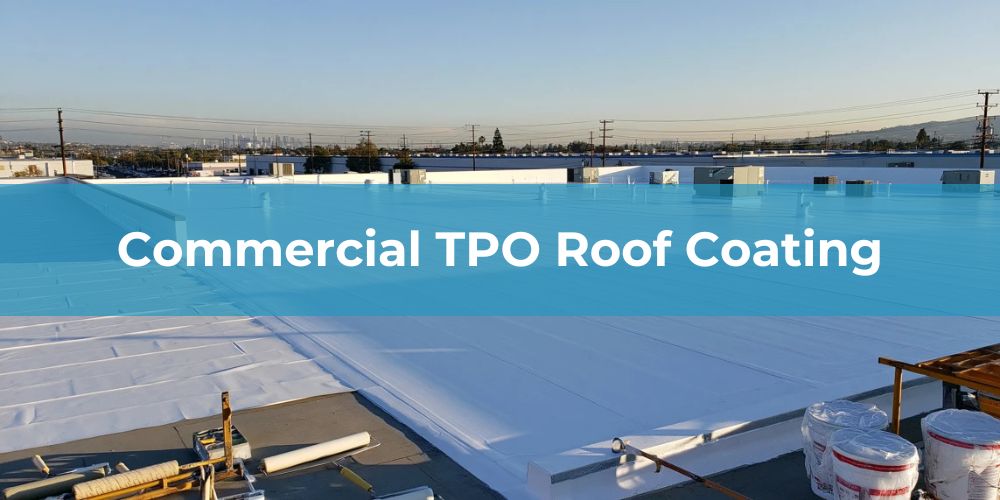
TPO Roofing Los Angeles provides commercial TPO roof coating for warehouses, retail centres, offices, industrial facilities, apartment buildings, and other Los Angeles properties with flat or low-slope TPO roofing systems. Commercial TPO roof coating is the application of a compatible liquid-applied protective system over a prepared and repairable TPO membrane. It may form part of a broader TPO roof restoration specification. The work repairs localised defects, reinforces vulnerable roof details, and creates a continuous protective layer across weathered but serviceable TPO without automatically removing and replacing the complete roofing assembly. All roofing work is completed by a California-licensed C-39 roofing contractor. A commercial TPO roof coating is not decorative paint or a method of concealing unresolved roof failure. A complete TPO coating specification may include membrane cleaning, adhesion testing, seam and puncture repairs, replacement of defective flashing materials, reinforcement around penetrations and transitions, application of a compatible primer, and installation of the specified coating at the required thickness. Repairs restore continuity at identifiable defects, reinforcement protects movement-sensitive details, and the finished coating shields the existing membrane from further weathering.
TPO roof coating is suitable only when inspection and moisture testing confirm that the existing membrane remains compatible, securely attached, and supported by sufficiently dry and serviceable insulation and decking. It should not be specified where the roof has widespread seam separation, extensive membrane deterioration, trapped moisture, saturated insulation, unstable attachment, structural deck damage, or drainage defects requiring physical correction. A coating follows the existing roof profile; it does not create new falls, unblock outlets, replace damaged insulation, or correct structural ponding.
The suitability and performance requirements for commercial TPO roof coating in Los Angeles are determined by the specific conditions affecting exposed roofing membranes:
- Prolonged ultraviolet exposure and elevated rooftop temperatures → accelerate surface weathering and reduce the flexibility of an ageing TPO membrane → a compatible reflective coating shields the existing surface from continued solar exposure → UV-driven deterioration is slowed and the roof’s remaining service life can be extended.
- Repeated daytime heating and overnight cooling → produce expansion and contraction across seams, flashings, penetrations, and membrane transitions → repaired details and reinforced coating interfaces accommodate limited thermal movement → localised stress and recurring separation at vulnerable details are reduced.
- Open seams, punctures, worn surfaces, and deteriorated roof details → interrupt the continuity of the existing waterproofing layer → targeted repairs and liquid-applied reinforcement close repairable openings before the field coating is installed → water entry is controlled without coating over active defects.
- Airborne dust and rooftop debris → accumulate around drains, scuppers, outlets, and low points → restricted water movement increases the duration of ponding after rainfall → cleaning and drainage correction must be completed before coating so unresolved obstructions are not encapsulated beneath the coating system.
- Long dry periods followed by concentrated or wind-driven rainfall → expose weaknesses at seams, penetrations, edges, and adjoining roof interfaces → repaired details and a continuous coating surface restore protection across serviceable areas → moisture is prevented from spreading into the insulation, roof deck, and occupied building space.
Commercial TPO roof coating is therefore selected according to the condition of the complete roofing assembly rather than its age or appearance alone. TPO Roofing Los Angeles evaluates membrane compatibility, adhesion, seam integrity, moisture presence, insulation condition, deck stability, roof drainage, and the distribution of existing defects to determine whether coating is technically viable. This assessment identifies the preparation and repairs required before coating and distinguishes roofs suitable for coating from those requiring broader restoration, partial reconstruction, or complete TPO roof replacement.
How Is a Commercial TPO Roof Evaluated for Coating in Los Angeles?
A commercial TPO roof is evaluated for coating by determining whether the existing membrane and supporting roof assembly can provide a dry, stable, compatible, and securely attached substrate for the proposed coating system. The assessment must identify active defects, concealed moisture, adhesion limitations, drainage problems, and damaged components before a coating specification is prepared. Los Angeles exposure conditions, including prolonged solar heating, airborne dust, rooftop equipment activity, Santa Ana wind events, and debris accumulation during extended dry periods, are considered because they affect membrane condition, surface preparation, attachment, and water movement across the roof.
The evaluation follows a defined sequence so each decision is supported by evidence from the individual roof:
- Roof construction and service history review: available information on the membrane manufacturer, TPO type, installation method, insulation build-up, roof age, previous leaks, repairs, coatings, warranties, and rooftop alterations is reviewed. This establishes which materials may be present, where recurring defects have developed, and whether earlier treatments could interfere with the proposed coating system.
- TPO membrane identification and compatibility assessment: the existing surface is confirmed as TPO and checked for contamination, ageing, oxidation, incompatible sealants, residual adhesives, and previous surface treatments. The proposed cleaner, primer, reinforcement, and coating must be chemically and physically compatible with the retained membrane rather than selected according to roof appearance alone.
- Field membrane and detail inspection: the roof is examined for punctures, splits, worn areas, open seams, failed welds, displaced membrane, loose terminations, deteriorated flashings, damaged penetrations, defective curbs, perimeter movement, and failed previous repairs. The inspection distinguishes isolated defects that can be corrected before coating from distributed failure that may prevent coating.
- Moisture investigation: internal leak history, visible staining, membrane conditions, and suspected wet areas are compared to determine whether water has entered beneath the TPO. Where required, a suitable moisture survey and selective investigative openings are used to establish whether insulation, cover board, fasteners, or decking have been affected. Wet materials must be removed to a verified dry boundary rather than encapsulated beneath the coating system.
- Attachment and substrate assessment: the membrane, insulation, cover board, fasteners, adhesive attachment, and structural deck are checked for movement, loss of bond, compression, deterioration, corrosion, decay, or instability. A coating can protect a serviceable surface, but it cannot stabilise a roofing assembly that is no longer securely connected to its substrate.
- Drainage and roof profile evaluation: drains, scuppers, gutters, outlets, sumps, low points, roof falls, and water flow routes are examined for obstruction, displacement, or persistent ponding. Dust, leaves, ash, and rooftop debris commonly accumulate during long dry periods in Los Angeles and may restrict drainage when concentrated rainfall occurs. Blockages and repairable drainage defects must be corrected before coating, while structural ponding or inadequate roof geometry may require reconstruction.
- Cleaning and adhesion testing: representative membrane areas are cleaned and prepared using the proposed method before test applications are completed. Adhesion testing confirms whether the selected primer and coating can form a reliable bond with the existing TPO after realistic surface preparation. Testing should include weathered areas, previous repair zones, contaminated locations, and other surfaces that may respond differently across the roof.
- Environmental and operational exposure assessment: the evaluation considers solar exposure, inland or valley heat, wind pressure at roof perimeters, airborne particulate deposition, rooftop HVAC servicing, foot traffic routes, and the vulnerability of occupied areas below. These conditions influence the required cleaning, reinforcement, traffic protection, detail treatment, and coating specification for the individual Los Angeles property.
- Coating boundary determination: the findings are used to separate roof areas that can be retained and coated from those requiring seam repair, flashing reconstruction, insulation replacement, substrate correction, partial removal, or complete replacement. The coating boundary must extend to sound, dry, stable, and compatible roofing materials so the coating system is not installed over concealed or continuing failure.
The evaluation establishes whether commercial TPO roof coating is technically viable, which components can remain, what defects must be corrected, and which primer, reinforcement, application thickness, and detail treatments are required. Once these conditions have been confirmed, the retained TPO membrane can be cleaned, repaired, reinforced, and prepared for coating.
Have a question about a TPO roofing project?
What Preparation Is Required Before a Commercial TPO Roof Is Coated in Los Angeles?
Before a commercial TPO roof is coated in Los Angeles, the approved coating area must be converted into a clean, dry, stable, compatible, and fully repaired substrate. Surface preparation is not limited to washing the membrane. It includes protecting the property, clearing drainage routes, removing materials that could interfere with adhesion, correcting defects within the coating boundary, reinforcing vulnerable details, and confirming that the retained TPO can support the specified liquid-applied system. TPO Roofing Los Angeles uses the findings from the roof evaluation to determine which preparation stages are required for the individual property.
The preparation sequence is organised into six connected stages:
- Roof access and work-area protection: safe access routes, material-storage areas, equipment zones, and working boundaries are established before preparation begins. HVAC intakes, occupied areas, walls, vehicles, landscaping, drains, and adjoining surfaces are protected where cleaning residue, removed materials, or liquid products could cause contamination or disruption. The work sequence must also account for rooftop servicing, pedestrian movement, and weather exposure so prepared areas are not damaged before coating.
- Debris removal and membrane cleaning: leaves, dust, ash, sediment, loose materials, and rooftop waste are removed from the field membrane, seams, drains, scuppers, gutters, outlets, equipment curbs, and low points. The TPO surface is then cleaned to remove embedded dirt, oils, grease, rooftop discharge, biological contamination, and other residues that could prevent reliable adhesion. Los Angeles roofs may require increased cleaning around mechanical equipment, traffic routes, drainage zones, and surfaces exposed to prolonged particulate deposition during dry or windy conditions.
- Removal of incompatible and failed materials: loose patches, deteriorated sealants, mastics, adhesives, temporary repairs, incompatible coatings, and other products that cannot remain beneath the proposed system are removed. The work must continue until stable and compatible TPO or an approved repair substrate is exposed. Applying primer or coating over poorly bonded material transfers the failure risk into the new system rather than creating a dependable connection with the existing roof.
- Correction of membrane, detail, and subsurface defects: open seams, failed welds, punctures, splits, worn membrane areas, loose terminations, damaged flashings, defective penetrations, unstable curbs, and failed drainage interfaces are repaired before field coating begins. Localised wet insulation, damaged cover board, unstable attachment, or deteriorated substrate materials are removed where identified during the evaluation. Repairs must extend to sound, dry, stable, and compatible roofing components rather than stopping at the visible edge of deterioration.
- Drainage correction and detail readiness: blocked outlets and repairable flow restrictions are cleared so the prepared roof does not retain avoidable standing water beneath or around the new coating system. Seams, penetrations, curbs, transitions, perimeters, repairs, and other movement-sensitive details are checked to confirm that required corrective work is complete and that each interface is clean, dry, stable, and ready to receive the specified primer and reinforcement treatment.
- Final coating-readiness verification: the prepared roof is checked to confirm that the surface is clean, dry, securely attached, free from incompatible residue, and within the conditions established by adhesion testing. Repairs, reinforced details, drainage routes, terminations, and areas of local component replacement are reviewed before field application proceeds. Coating should not begin where contamination, active moisture, unstable materials, incomplete repairs, or unsuitable weather conditions could prevent the system from bonding or curing correctly.
Each stage removes a separate cause of premature coating failure. Cleaning exposes the actual membrane condition, incompatible-material removal creates a reliable bonding surface, repairs restore waterproofing continuity, and drainage correction prevents unresolved water-flow defects from being concealed. Once TPO Roofing Los Angeles confirms that the retained membrane and repaired details satisfy the preparation and adhesion requirements, the roof is ready to receive the specified primer, reinforced detail treatments, and liquid-applied field coating.
Have a question about a TPO roofing project?
How Is a Commercial TPO Roof Coating System Installed and Verified in Los Angeles?
A commercial TPO roof coating system is installed only after the approved coating area has been repaired, cleaned, and confirmed as dry, stable, compatible, and ready for application. TPO Roofing Los Angeles coordinates the primer, reinforced detail treatments, field coating, curing, and completion checks as one continuous installation process. The selected products, coverage rates, film thicknesses, application methods, and curing requirements must follow the coating specification for the individual roof rather than a universal application formula. Installation conditions are particularly important in Los Angeles because high membrane temperatures, direct solar exposure, airborne dust, Santa Ana winds, and sudden changes between dry weather and concentrated rainfall can affect application, curing, and surface continuity. Work must be sequenced within suitable weather and substrate conditions so liquid materials do not skin prematurely, collect contamination, move under wind pressure, or encounter moisture before curing.
The coating system is installed and checked through six connected stages:
- Application-condition verification: the prepared TPO surface, ambient temperature, membrane temperature, humidity, wind, and forecast rainfall are checked before products are applied. The roof must remain within the specified installation range for the primer and coating system. Application is postponed where excessive heat, condensation, strong wind, dust movement, approaching rain, or insufficient curing time could compromise adhesion or film formation.
- Primer and detail-treatment installation: compatible primer is applied where required by the approved specification and confirmed adhesion testing. Seams, penetrations, curbs, flashings, transitions, perimeters, drains, previous repairs, and other movement-sensitive interfaces receive the specified reinforcement or liquid-applied detail treatment before the main field coating. These areas are completed first because they contain changes in material, direction, restraint, or movement that require more than uniform surface coverage.
- Field-coating application: the liquid-applied coating is installed across the prepared TPO membrane using the approved roller, brush, spray, or combined method. Material is distributed at the specified coverage rate so the surface receives continuous protection without thin areas, excessive accumulation, trapped contamination, or untreated gaps around roof details. Application is planned in controlled sections so each completed area can be inspected before work advances.
- Coat build and curing control: where the specification requires more than one application, each coat is allowed to cure sufficiently before the next is installed. Successive applications may be arranged in different directions to improve continuity and reveal missed areas. Coverage records and wet-film or dry-film measurements are used where required to confirm that the completed system achieves the specified material quantity and thickness rather than relying on appearance alone.
- Continuity and detail inspection: the cured coating is examined for pinholes, voids, blisters, contamination, thin coverage, incomplete curing, exposed reinforcement, missed membrane, and discontinuities around seams, penetrations, curbs, terminations, drains, edges, and repaired areas. Suspect locations are corrected using compatible materials and rechecked so the field surface and reinforced details form one continuous protective system.
- Completion verification: the finished roof is reviewed against the approved coating specification, application records, material quantities, thickness requirements, and detail treatments. Drainage routes are confirmed as clear, rooftop equipment and access areas are checked for installation damage, and surplus materials or temporary protection are removed. The system is accepted only when the coating is cured, continuous, securely bonded, and complete across every area included within the coating boundary.
Each stage controls a different installation risk. Suitable weather protects adhesion and curing, reinforced details strengthen vulnerable interfaces, controlled field application establishes continuous coverage, thickness checks confirm the required material build, and final inspection identifies discontinuities before the roof returns to normal service.
Once TPO Roofing Los Angeles confirms that the installed coating system meets the specified coverage, thickness, curing, adhesion, detail, and continuity requirements, the completed roof can be returned to service with maintenance and access controls appropriate to the property.
Have a question about a TPO roofing project?
When Should a Los Angeles Business Engage a TPO Roofing Contractor?
A Los Angeles business should engage a TPO roofing contractor when an existing membrane is ageing, visibly weathered, developing recurring localised defects, or approaching the point where continued patch repairs may no longer provide the most efficient route to maintaining serviceable roof performance. Assessment is also appropriate where seams, flashings, penetrations, traffic areas, drainage interfaces, or previous repairs show deterioration but the wider TPO assembly may still be suitable for coating. Early investigation is particularly important where ponding, restricted drainage, repeated rooftop servicing, prolonged solar exposure, or signs of concealed moisture could allow deterioration to spread beyond the visible membrane surface. A roof that remains suitable for coating may be retained through targeted repair, preparation, reinforcement, and liquid-applied protection, while delayed assessment can allow moisture, attachment problems, or membrane deterioration to progress into a broader restoration or replacement requirement.
Assessment should also be completed before significant rooftop alterations such as HVAC replacement, new curbs, penetrations, solar equipment, supports, or changes to drainage components. These works can disturb existing waterproofing, change traffic patterns, introduce new interfaces, or affect how water moves across the roof. Reviewing the TPO system before alterations begin allows existing defects and coating requirements to be incorporated into the planned work rather than addressed after damage occurs. TPO Roofing Los Angeles can also assess commercial roofs as part of capital planning where the owner needs to determine whether continued maintenance, targeted repair, roof coating, broader restoration, or replacement is the appropriate next intervention. The decision should be based on membrane compatibility, moisture condition, attachment, drainage, substrate stability, defect distribution, and the remaining serviceability of the roofing assembly rather than age alone. Contact TPO Roofing Los Angeles when a commercial TPO roof requires coating-suitability assessment, investigation of developing defects, coordination before rooftop alterations, or a clear determination of whether the existing membrane can be protected and retained before deterioration increases the scope of required work.